Planning a marketing budget is one of the most stressful decisions founders and business owners face. Spend too little and you don't grow. Spend too much in the wrong places and you burn cash with nothing to show for it. If you're wondering how to plan a marketing budget that actually drives growth in 2026 β without wasting money or falling behind competitors β this guide walks you through the exact process, backed by real data and practical frameworks.
Whether you're a bootstrapped startup with $5,000/month or a growth-stage company with $100,000+ to invest, you'll learn how much to spend, where to allocate it, and how to adjust based on what's working. Let's start with the fundamentals.
π‘ What Is a Marketing Budget and Why It Matters
A marketing budget is a financial plan that outlines how much you'll spend on marketing activities over a defined period (typically monthly, quarterly, or annually). It includes costs for advertising, content creation, tools, agencies, staff, and any other resources needed to attract and convert customers.
Why Marketing Budget Planning Is Critical
- Prevents overspending without ROI. A clear budget forces you to prioritize high-impact activities and cut wasteful spending.
- Ensures you invest enough to compete. Businesses that systematically underspend on marketing get outpaced by competitors who invest strategically.
- Enables performance tracking. Without a budget, you can't measure ROI or optimize spend effectively.
- Aligns marketing with business goals. Your budget should directly support revenue targets, customer acquisition goals, and growth objectives.
- Provides accountability and transparency. A documented budget creates clarity between marketing teams, leadership, and finance departments.
π‘ 2026 Reality: Marketing budgets now average 9.4% of company revenue β up from 7.7% in 2024 β as businesses realize marketing is no longer optional for growth. Yet 59% of CMOs still say they don't have enough budget to execute their strategy. The winners aren't those who spend the most β they're those who allocate smartest.
π How Much Should You Spend on Marketing in 2026?
The most common question: "What percentage of revenue should I allocate to marketing?" Here's what the 2026 data shows:
| Business Stage | Recommended % of Revenue | Rationale |
|---|---|---|
| Pre-Revenue / Pre-PMF | 15% β 20%+ | Aggressive spending to validate demand, test channels, and build initial customer base |
| Early-Stage / Startup | 12% β 20% | High growth mode β need to acquire customers quickly and establish market presence |
| Growth Stage | 7% β 12% | Scaling what works while balancing efficiency and expansion |
| Established / Mature | 5% β 8% | Maintenance mode with selective growth investments in new markets or products |
Industry-Specific Benchmarks
Your industry also influences appropriate spend levels:
- SaaS & Technology: 15β25% (high CAC, long sales cycles require sustained investment)
- E-commerce & Retail: 10β15% (direct-to-consumer brands need constant traffic)
- Consumer Packaged Goods: 15β18% (highly competitive, brand-driven markets)
- B2B Services: 7β12% (relationship-driven sales with longer close times)
- Healthcare & Insurance: 8β12% (regulated but competitive industries)
- Manufacturing: 5β7% (longer sales cycles, relationship-heavy)
- Energy & Utilities: 3β5% (established markets with limited competition)
π The Formula: If you're doing $500K in annual revenue and in growth stage, a 10% marketing budget = $50,000/year or ~$4,200/month. If you're doing $5M in revenue, 10% = $500K/year or ~$42,000/month. Start with these benchmarks, then adjust based on your specific goals and competitive landscape.
Need a Marketing Budget Template?
Download our free Excel template with formulas, allocation guides, and ROI tracking built in. β
π Step-by-Step: How to Plan Your Marketing Budget
Follow this framework to build a marketing budget that aligns with your goals and resources:
-
Set Clear, Measurable Business Goals
Define specific revenue targets, customer acquisition goals, or market expansion objectives for 2026. Example: "Grow from $2M to $4M ARR by acquiring 500 new customers at an average LTV of $4,000." Your marketing budget should directly support these goals.
-
Calculate Your Starting Budget Range
Use the percentage-of-revenue method as a baseline. If you're projecting $1M revenue in 2026 and you're in growth stage, start with 10% = $100,000 annual budget, or $8,300/month. Adjust up if you're pre-revenue or highly competitive markets.
-
Analyze Last Year's Performance
Review what you spent in 2025 and what returned results. Which channels delivered the lowest cost-per-acquisition? Which delivered the highest customer lifetime value? Double down on what worked, cut what didn't.
-
Research Competitor Spending
Use tools like SEMrush or SimilarWeb to estimate competitor ad spend and channel focus. If they're outspending you 3:1 in paid search and winning, you need to either match, differentiate, or choose different channels.
-
Allocate Budget by Channel & Goal
Divide your total budget across proven channels (SEO, paid ads, email) and experimental channels (new platforms, tactics). Use the 70/20/10 rule: 70% on proven strategies, 20% on emerging channels, 10% on experiments.
-
Factor in Fixed vs Variable Costs
Fixed costs include salaries, software subscriptions, and agency retainers. Variable costs include ad spend and freelance work. Make sure your budget accounts for both and leaves room for flexibility.
-
Build in Quarterly Flexibility
Don't lock your entire year into a rigid plan. Reserve 10β15% of budget as uncommitted funds to reallocate quarterly based on performance. Markets shift too fast for "set it and forget it" budgeting.
-
Get Stakeholder Buy-In
Present your budget to leadership, finance, and sales teams with clear ROI projections and milestone-based releases. Tie spending to measurable outcomes so everyone understands what success looks like.
π Marketing Budget Allocation by Channel (2026 Data)
Based on 2026 industry research, here's how successful companies are allocating budgets across major channels:
| Channel | % of Total Budget | Best Use Case | Expected ROI |
|---|---|---|---|
| Paid Advertising (Google, Facebook, LinkedIn) |
25% β 35% | Immediate traffic, lead gen, direct response | 2:1 to 5:1 ROAS |
| SEO & Organic Content | 15% β 25% | Long-term traffic, authority building | 5:1 to 13:1 (after 6β12 months) |
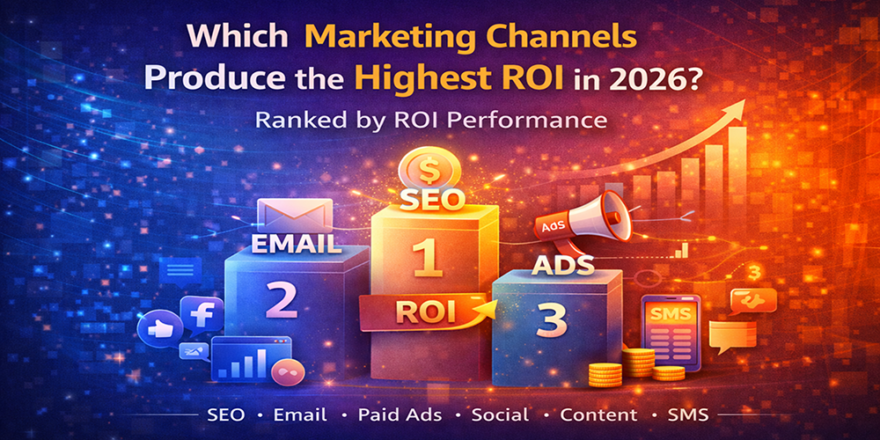
| Email Marketing | 5% β 10% | Nurture, retention, upsells | 36:1 to 42:1 ROI |
| Social Media (Organic + Ads) |
10% β 15% | Brand awareness, community, engagement | Varies widely (2:1 to 20:1) |
| Technology & Tools (CRM, analytics, automation) |
10% β 15% | Operational efficiency, tracking, optimization | Indirect (enables other channels) |
| Agency & Freelancers | 10% β 20% | Specialized expertise, execution capacity | Depends on deliverables |
| Events & Sponsorships | 5% β 10% | Networking, brand building, partnerships | Hard to measure directly |
| Experimentation Fund | 10% β 15% | Testing new channels, tactics, creative | Unknown (by definition) |
Important Note: These percentages should adjust based on your business model and what's proven to work. A pure e-commerce brand might allocate 50% to paid ads. A content-driven SaaS company might allocate 40% to SEO and content.
πΌ Marketing Budget Examples by Business Stage
Here are realistic budget breakdowns for three common scenarios:
Example 1: Early-Stage Startup ($500K ARR)
- Total Annual Revenue: $500,000
- Marketing Budget (15%): $75,000/year = $6,250/month
- Allocation:
- Paid Ads (Google + Facebook): $2,500/month (40%)
- SEO & Content: $1,500/month (24%)
- Email Marketing: $500/month (8%)
- Tools & Software: $750/month (12%)
- Freelancer/Agency: $1,000/month (16%)
Example 2: Growth-Stage Company ($3M ARR)
- Total Annual Revenue: $3,000,000
- Marketing Budget (10%): $300,000/year = $25,000/month
- Allocation:
- Paid Ads: $8,000/month (32%)
- SEO & Content: $6,000/month (24%)
- Email Marketing: $2,000/month (8%)
- Social Media: $3,000/month (12%)
- Tools & Tech: $2,500/month (10%)
- Agency Retainer: $3,500/month (14%)
Example 3: Established Business ($10M ARR)
- Total Annual Revenue: $10,000,000
- Marketing Budget (7%): $700,000/year = $58,300/month
- Allocation:
- Paid Ads: $18,000/month (31%)
- SEO & Content: $12,000/month (21%)
- Email Marketing: $4,000/month (7%)
- Social Media: $6,000/month (10%)
- Events & Sponsorships: $5,000/month (9%)
- Tools & Tech: $5,300/month (9%)
- In-House Team Salaries: $8,000/month (14%)
π‘ Key Insight: Notice how the percentage of revenue decreases as companies mature, but absolute dollars increase. A $500K startup spending 15% invests $75K. A $10M business spending 7% invests $700K β nearly 10x more in absolute terms.
Need a Custom Budget Plan for Your Business?
Let us analyze your revenue, goals, and competitive landscape β then build a marketing budget tailored to your stage and industry.
Request Your Free Budget Analysis βπΊ Digital vs Traditional Marketing Budget Comparison
In 2026, most businesses allocate the vast majority of budgets to digital channels. Here's why:
| Factor | Digital Marketing | Traditional Marketing |
|---|---|---|
| Targeting Precision | Highly specific (demographics, interests, behavior) | Broad and imprecise |
| Cost | Lower barrier to entry, scalable spend | High upfront costs (TV, print, radio) |
| Measurability | Real-time tracking, detailed ROI analytics | Difficult to measure directly |
| Speed to Market | Launch campaigns in hours/days | Weeks to months of lead time |
| Flexibility | Adjust budgets and creative instantly | Fixed once committed |
Recommendation: For most businesses in 2026, digital should represent 85β100% of total marketing budget. Traditional channels (TV, print, radio, outdoor) make sense only for:
- Local service businesses reaching specific geographic areas (e.g., direct mail, local radio)
- Luxury brands targeting high-net-worth demographics who consume premium print media
- Large enterprises running mass-market brand campaigns
β οΈ Common Marketing Budget Mistakes to Avoid
Even experienced marketers make these costly errors:
- Setting budgets based on "what's left over". Marketing should be a strategic investment, not an afterthought. Allocate based on revenue goals, not discretionary cash flow.
- Spreading budget too thin across too many channels. Doing 10 things poorly beats doing 3 things excellently. Focus budget on channels where you can achieve meaningful scale.
- Ignoring customer acquisition cost (CAC) and lifetime value (LTV). If your CAC is $500 but your average customer LTV is $300, you're losing money on every customer. Budget planning must account for unit economics.
- Failing to reserve budget for testing. Markets change fast. If you spend 100% on proven tactics with zero room for experimentation, you'll miss new opportunities and fall behind competitors.
- Not tracking ROI by channel. If you can't tell which channels drive profitable growth, you're flying blind. Invest in analytics and attribution from day one.
- Treating the annual budget as fixed. The best budgets are quarterly reviewed and reallocated based on performance. What works in Q1 might not work in Q3.
- Underestimating tool and technology costs. Software subscriptions, analytics platforms, and automation tools add up fast. Budget 10β15% for technology infrastructure.
- Cutting marketing during downturns. Businesses that maintain or increase marketing during recessions often gain market share from competitors who go dark. Don't panic-cut when times get tough.
π How to Adjust Your Budget Based on Performance
Your initial budget is a hypothesis. Use these triggers to reallocate funds quarterly:
Signals to Increase Spend
- A channel consistently delivers 3:1+ ROI for 2+ months
- You're hitting pipeline capacity and need more leads
- Competitors are outspending you and capturing market share
- You've validated product-market fit and need to scale acquisition
Signals to Decrease or Pause Spend
- A channel delivers below 1.5:1 ROI for 2+ consecutive months
- CAC is rising while LTV stays flat or declines
- You're generating more leads than sales can handle
- Major platform algorithm changes negatively impact performance
Quarterly Review Framework
- Analyze performance data for every channel (traffic, leads, CAC, ROI)
- Identify top performers and underperformers
- Reallocate 10β20% of budget from underperformers to winners
- Test 1β2 new tactics with experimental budget
- Update projections and communicate changes to stakeholders
π οΈ Tools to Track Marketing Spend & ROI
Use these tools to monitor budgets and measure performance:
Budget Management & Tracking
- Google Sheets / Excel: Simple budget templates with formulas for tracking actual vs planned spend
- QuickBooks / Xero: Accounting software that integrates marketing spend with overall financials
- Allocadia: Enterprise-level marketing performance management platform
Analytics & Attribution
- Google Analytics 4: Free website analytics tracking traffic, conversions, and revenue attribution
- Google Search Console: SEO performance and search visibility tracking
- HubSpot / Salesforce: CRM platforms with marketing attribution and ROI reporting
- Triple Whale / Northbeam: Multi-channel attribution for e-commerce
Channel-Specific Platforms
- Google Ads / Meta Ads Manager: Native platforms for paid ad tracking
- SEMrush / Ahrefs: SEO performance and competitive intelligence
- Mailchimp / Klaviyo: Email marketing analytics and ROI tracking
β Is Your Marketing Budget Working? Key Metrics to Watch
Track these metrics to evaluate budget effectiveness:
Acquisition Metrics
- Customer Acquisition Cost (CAC): Total marketing spend Γ· new customers acquired
- Cost Per Lead (CPL): Total spend Γ· qualified leads generated
- Marketing Qualified Leads (MQLs): Number of leads meeting your qualification criteria
Revenue Metrics
- Marketing-Attributed Revenue: Revenue directly tied to marketing touchpoints
- Return on Ad Spend (ROAS): Revenue generated Γ· ad spend (target: 3:1 minimum)
- Customer Lifetime Value (LTV): Average revenue per customer over their lifetime
- LTV:CAC Ratio: Should be at least 3:1 for sustainable growth
Efficiency Metrics
- Marketing as % of Revenue: Are you spending within healthy benchmarks?
- Payback Period: How long to recover CAC through customer revenue?
- Budget Variance: Actual spend vs planned spend by channel
π― Success Benchmark: If your LTV:CAC ratio is 3:1 or higher and your payback period is under 12 months, your marketing budget is working efficiently. If LTV:CAC is below 2:1, you're likely overspending relative to customer value.
Talk to a Growth Marketing Expert
Get personalized guidance on budget planning, channel selection, and performance optimization β completely free, zero pressure.
Schedule Your Free Strategy Call ββ Frequently Asked Questions
Marketing Budget Team
Our team has planned and optimized marketing budgets for startups through Series C companies across SaaS, e-commerce, B2B services, and DTC brands. We've managed budgets from $50K to $5M+ and learned hard lessons about what works, what wastes money, and how to scale efficiently. This guide reflects real-world experience, not just theory.